Souvenir d'outre-mort
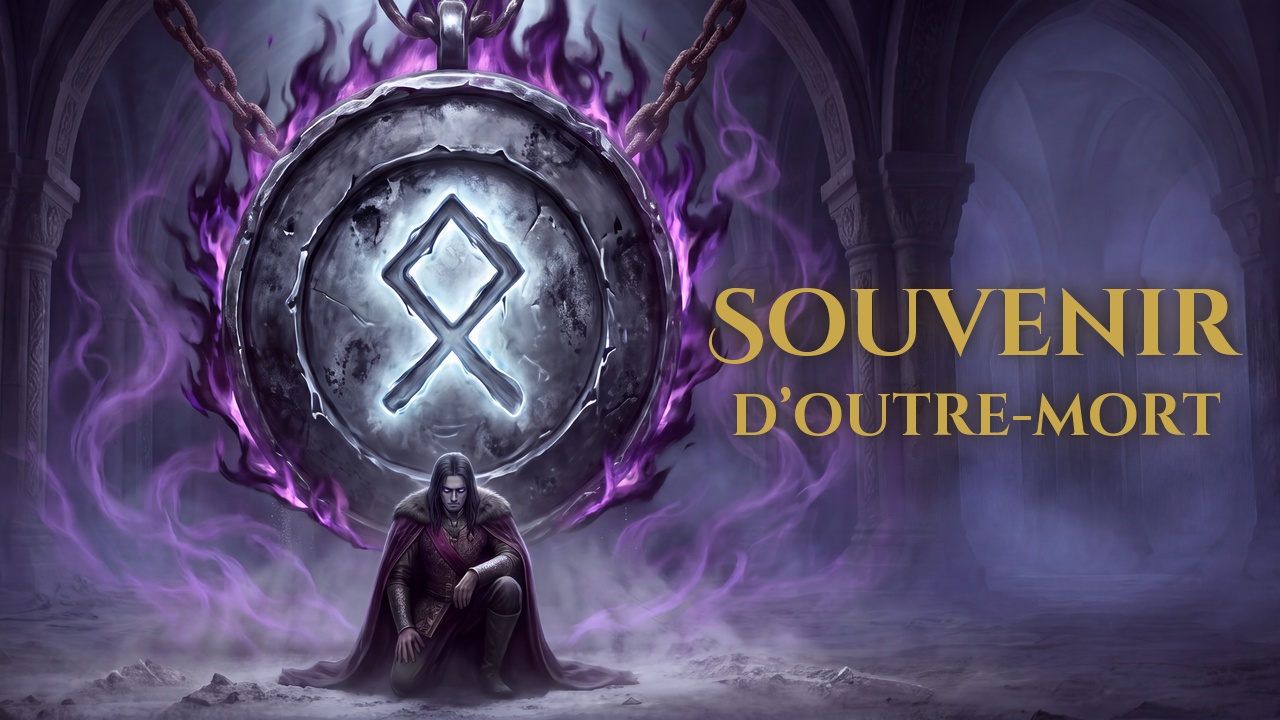
I wake in my own tomb, with no memory and far too late. Who called me back, and what they want of me, are still missing.
What is missing
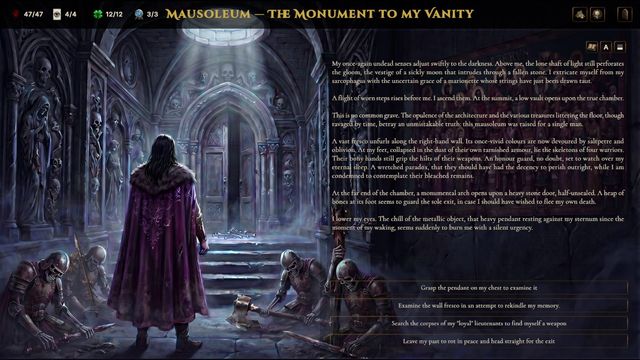
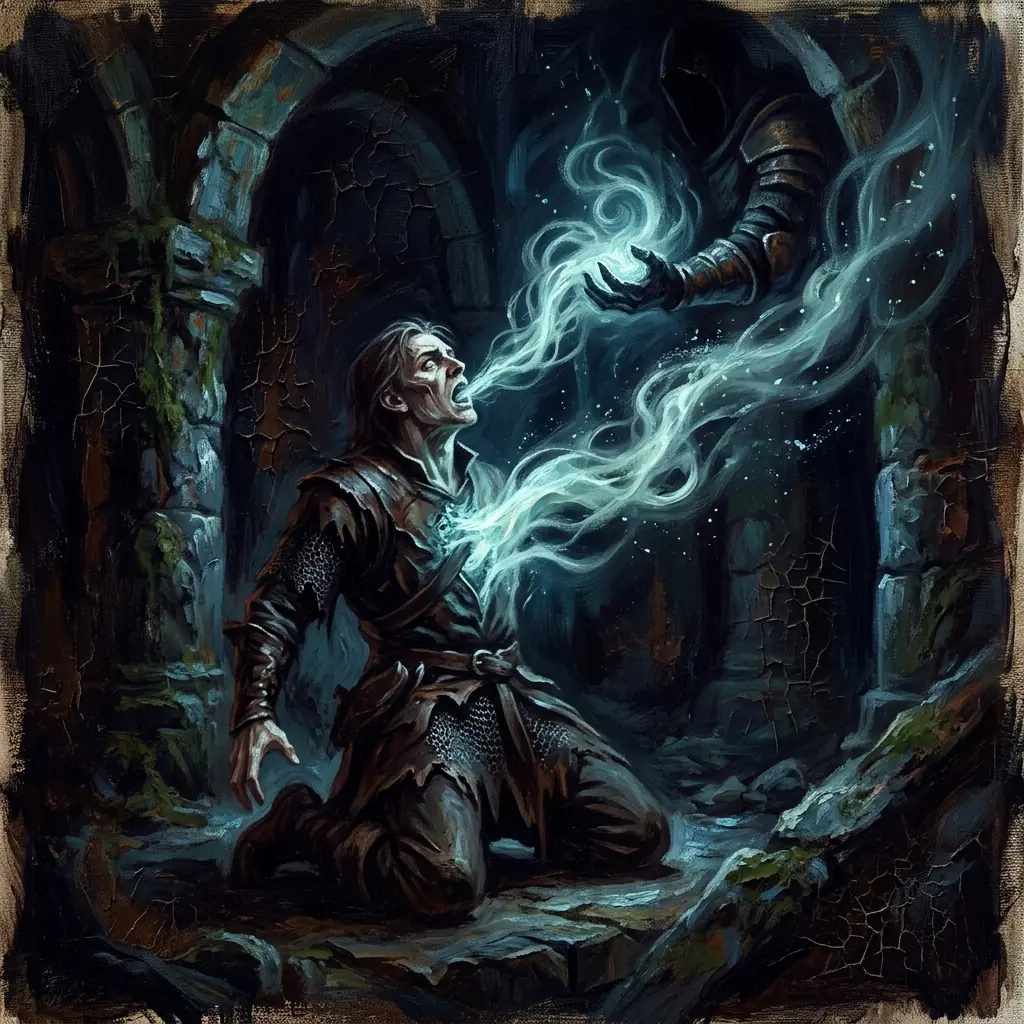
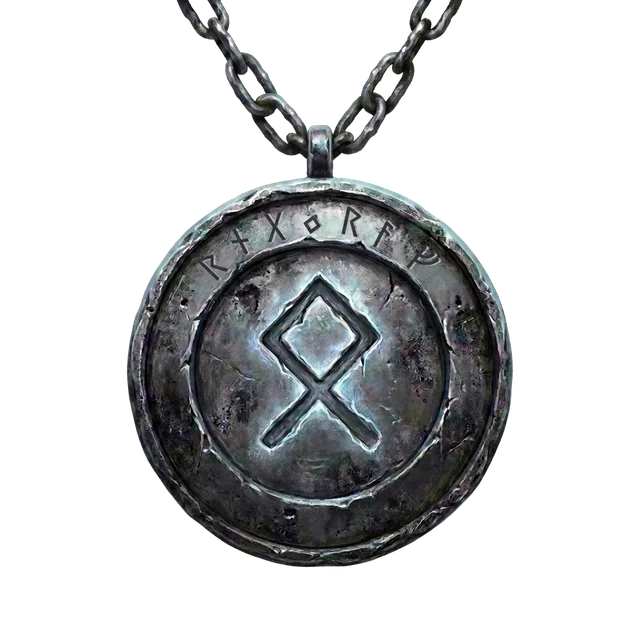
I rise inside a sarcophagus, with no breath to be surprised with. My heart keeps quiet, and I stand all the same. Around me, a mausoleum raised for a single man, and at my feet the skeletons of my honour guard, who had the decency, they at least, to die for good. A tarnished silver medallion carries a name. I will have to take its word for it.
My memory stayed behind in the tomb. Of the man I was only scraps remain, and I will have to gather them one by one.
Why did I rise? What am I meant to do? I still don't know. It will have to be dug up, like the rest.
Azérée is a gothic empire built on bone and stone: gutted cathedrals, broken arches, funerary gargoyles watching over tombs better kept than the houses. Death was honoured here as an institution. The Cult kept the registers, its Guardians of the Passage sat with the dying, prepared the bodies and recited what was needed for the soul to find the way out. No one left without being counted.
Then the mist came. The living went to ground behind their walls, and the dead stopped staying put. What is laid in the earth no longer stays there. No one is surprised by it, they guard against it, and in their eyes I am one more case.
Every soul passes, and none passes alone: we hold the door. What climbs back out of the earth without our rites has not returned. It has strayed on the way.
Dying, I had a knack for. It's the waking that's out of practice.
A waking with no witness
I open my eyes in the dark, and no one is there to tell me why. Everything must be learned again.
Memories in shards
The man I was comes back in fragments, and out of order. No one is coming to sort them for me.
The road without rest
There is an end to this road. Several, perhaps. None of them resembles rest.
Rites without a voice
Every death was counted, and read its road. The registers remain, those who kept them do not. What comes out of the ground these days was never told.
Read. Choose. Fight. Remember.
A gamebook, and a card game when it comes to blows. You read, and you decide. Combat only comes when the story calls for it: two cards a round, laid face down, drawn from a deck you build yourself.
Read, then decide
A paragraph, then a choice
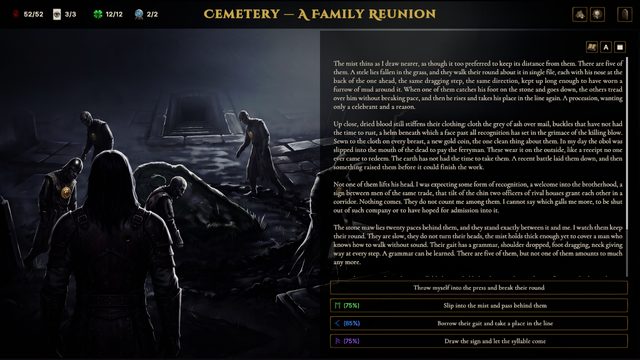
The tale moves in illustrated paragraphs, and each ends on a door to be pushed: a path, a word, an option only some will be able to seize, a trial where you stake your hide, or a fight. The game keeps every paragraph you cross. The tomb keeps nothing.
The trial
A risky choice is settled by a trial. Your attribute sets the odds, fate decides, and the odds are shown before you click. A failure can be bought back with Chance. What it costs, the story tells.

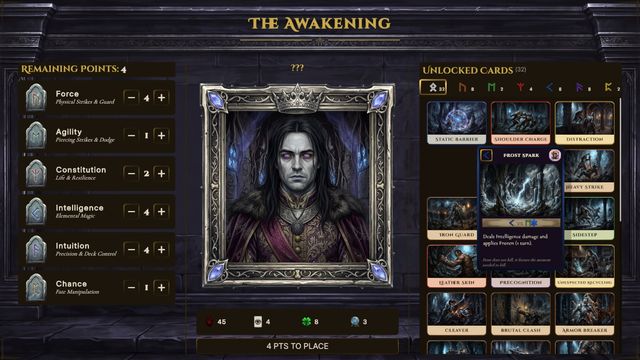
Six attributes, fourteen points
Force, Agility, Constitution, Intelligence, Intuition, Chance. You begin at 1 across the board, with 14 points to divide the way one divides an inheritance. Each point opens the cards of its family. The rest are earned along the story, and the story alone decides to yield them.

Two Chances, two stages
On the road, Story Chance buys back a failed test. It does not refill on its own, though the journey returns some, now and then, to those who know how to cross it. In combat, another reserve, Combat Chance, comes back full with every victory. Neither ever pays for the other: what you burn on the way, the next foe will never know.

The Premonition
Dying is nothing final, for those who see it coming. A Premonition replays a lost fight, life and reserves restored. From certain key paragraphs it also takes you one step back, to the very state you left behind. One step, never two. How many you hold rests on Intuition. Without one, death becomes again what it has always been.
Walking mends
The undead do not heal, they patch themselves up. You regain 1 Hit Point with every new paragraph explored. Moving on mends, slowly, and the road never runs short of reasons to stop.

The camp
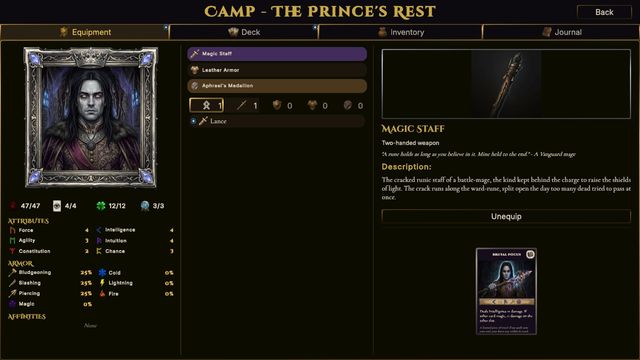
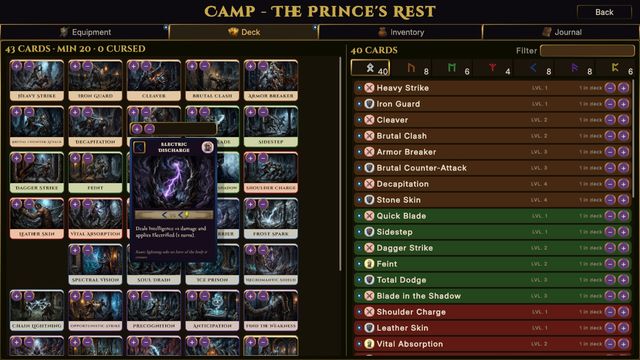
A fire, a canvas, four gestures: equipment, inventory, deck, and the journal where recovered memories are laid to rest. There you rebuild your arsenal between two stretches of the story, before going back into the mist.
Two ways to travel light
If you would rather read, Story Mode lets combat settle itself, and combos are attempted by chance. If you would rather not, Summary Mode trades each passage for its short version, told in the same voice, and one button brings the full text back whenever you like. The choices and the trials stay in your hands. The dead man will not notice the difference.
Six attributes, one body
Each from 1 to 6. Every point opens the cards of its family, and gives the attribute its moment.
The raw power of the arm. It carries crushing blows and a share of the blade, and holds a few guards, the kind that always soak up the same amount. It presides over nothing, and has no need to: what it strikes remembers.

Speed and precision. It guides slashing and piercing blows up close, and it is what nearly one attack in two finds waiting. It also decides who strikes first. The most agile resolves their blow before the other, which is often all it takes.
The endurance of the body, dead or not. It sets your Hit Points, carries the heaviest defenses, and strikes too, crushing, when the carcass is the weapon. A corpse short of it goes back into the ground faster than it came out.

The magic of Azérée is written before it burns. It carries magic damage, shields you from enemy spells, and has your afflictions play before the enemy's: burning, frost, whatever settles in and lingers.

The sense of battle, and what is left of a sixth sense to the dead. It raises your odds of success, opens the round, pays for one more card in combat, for the combos of three families and for your powers on the road. A few piercing blows answer to it, the ones that look for the gap rather than the mass. It counts your Premonitions.

Fortune's favour, spent point by point. It lifts your rolls to hit and your tests on the road, guarantees a hit or wagers on the die. It sets two reserves: the combat one, full after every victory, and the story one, which must last the road.
Two slots, face down

No mana, two slots
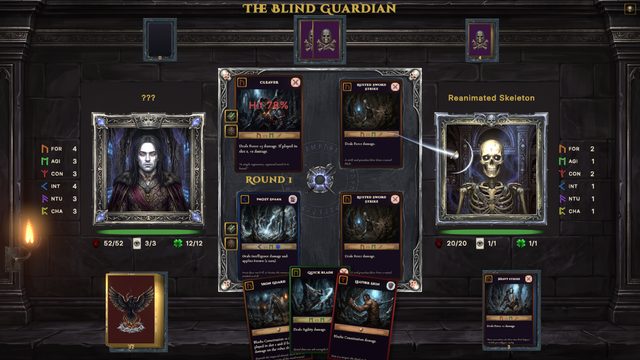
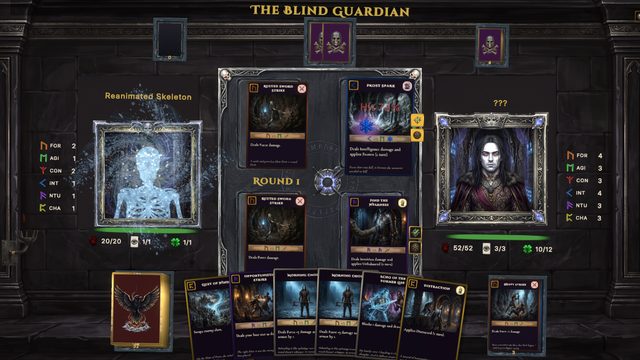
Cards cost nothing, not even a breath. Each round, each side draws 1 card, then lays 1 or 2 face down on two slots. Turn, resolve, slot after slot. The rest is a matter of a hand well kept, of foresight, and of bluff.

Nothing hits for certain
A card laid is not a blow landed. Every strike is played against the defense across from it, and a well-chosen Defense card makes it miss, or soaks up the worst of it. Fate keeps its share, your attributes shrink it. Only Chance removes it.
The most agile strikes first
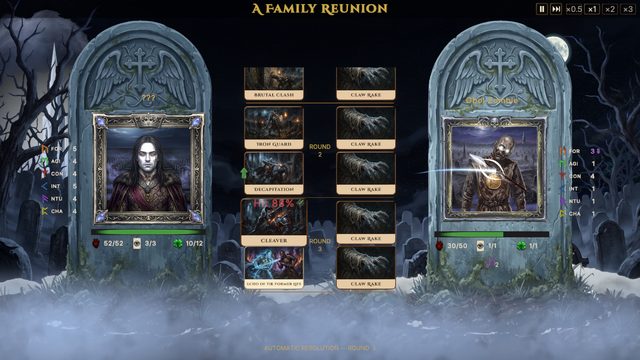
No fixed order between the sides: the attributes decide. The most agile lands their blow before the other, the sharpest mind has their afflictions bite first. An affliction that gnaws at an attribute can cost you that rank, and rank is paid in blood.
Two gestures of Chance
On a card you have laid, 1 point of Combat Chance guarantees the hit: the blow can no longer miss. 1 more point is wagered on the die, whose face reveals its effect at resolution. Both gestures stack on the same card, for those with enough to pay.
Intuition, a travelling reserve
It pays for your powers on the road and, in combat, for one more card at the price of a slot, as well as the combos of Force, Intelligence and Intuition. The gauge comes back full only on the evening of a victory. What you spend on the way, you owe to the next one, and it will come to collect.
A deck that keeps its wounds
20 cards at the least, assembled at camp. The deck crosses the fights without forgetting a thing, draw pile and discard included, and every reshuffle slips in a Rotten flesh, a card that does nothing and stays. The hand holds 8: the ninth burns, before your eyes.
The weapon brings its card
A weapon, a shield, a trinket each bring a card of their own, added to your opening hand on top of your playing cards, taking none of their place and counting for nothing in the deck. An executioner's axe is played, not worn.
Families, afflictions, combos
Six families, one per attribute, and five kinds of card: Attack, Defense, Magic, Tactic, Equipment. Afflictions, burning, frost, stun, that settle in and linger. And combos, when your two cards agree better than you had planned: each is paid in Intuition or in Combat Chance, by its family, and no build goes without.
A few cards
Six families, six cards: a glimpse of the arsenal. The rest waits at the bottom of the tomb. It has time.

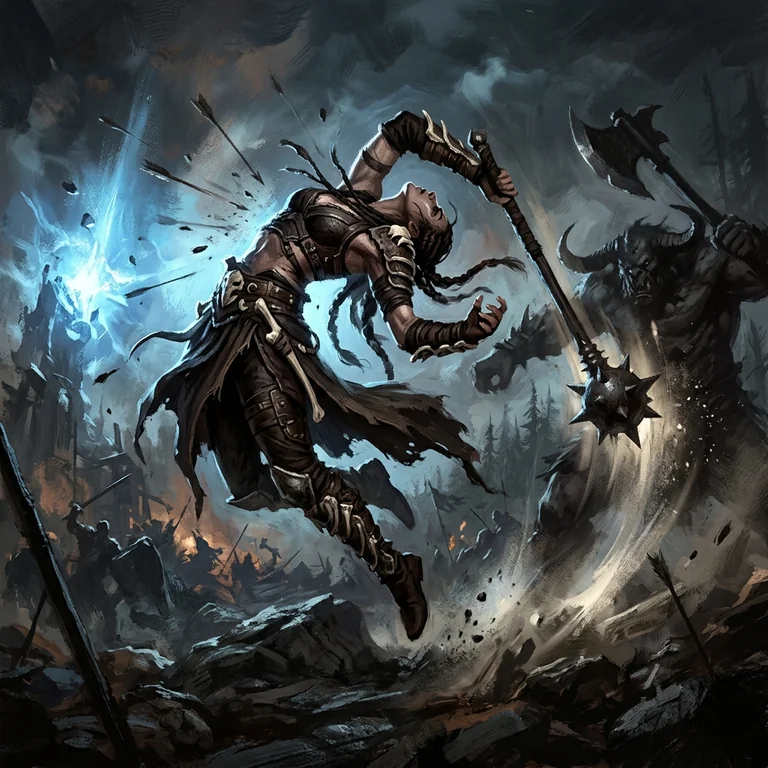
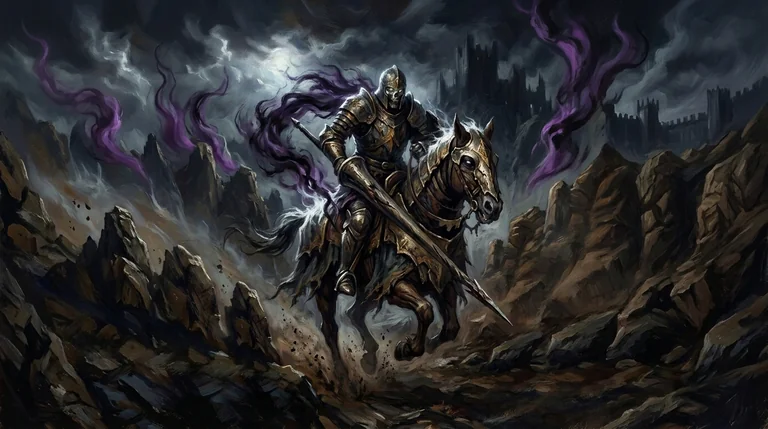
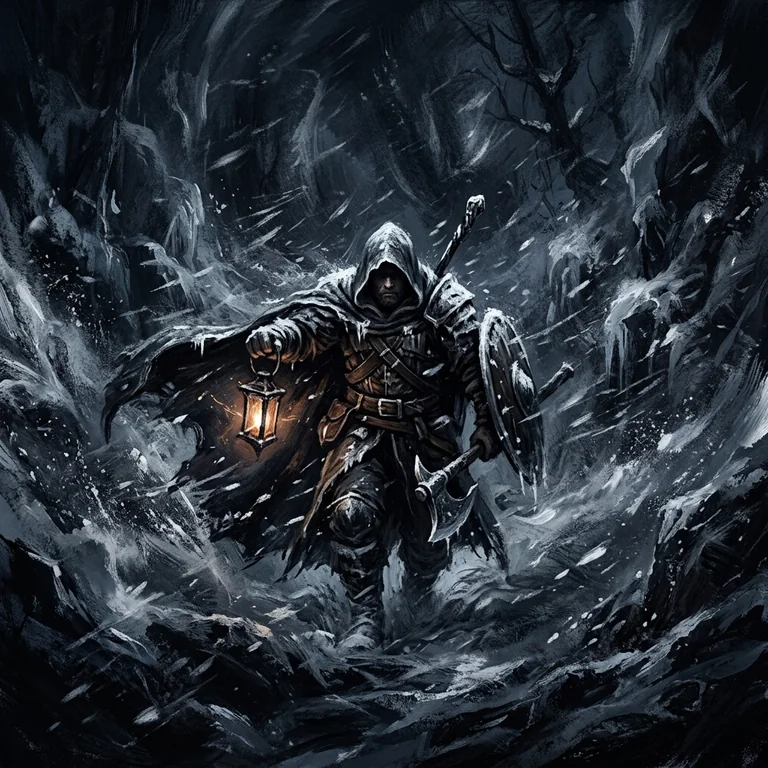
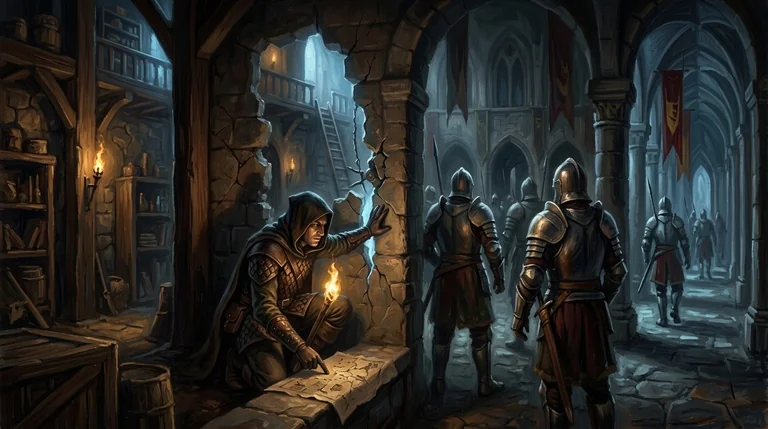
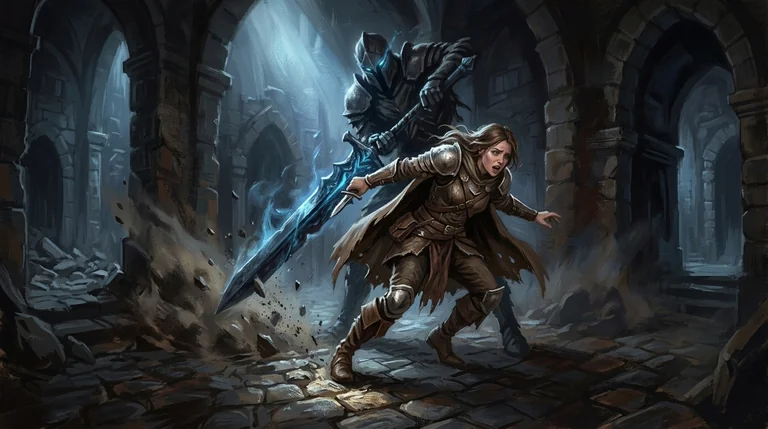
First looks
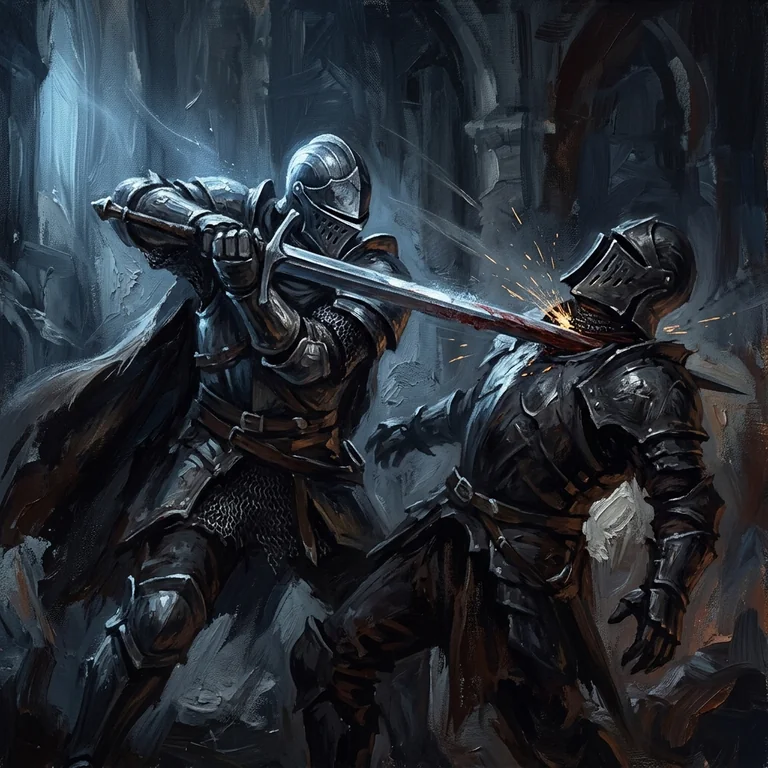
Fragments of Azérée captured along the way.